Understanding business tax return deadlines is critical for Australian companies, partnerships, and trusts. Missing lodgement dates can trigger penalties, interest charges, and additional compliance scrutiny from the Australian Taxation Office.
In Australia, tax deadlines vary depending on the business structure, lodgement method, and whether a registered tax agent is involved. Many businesses assume the deadline is always 31 October, but that only applies in specific situations.
This guide explains the key 2026 tax return deadlines, common compliance mistakes, and how lodgement timing changes when a registered tax agent prepares the return.
Quick Overview: Business Tax Return Deadlines 2026
| Business Type | Standard Lodgement Deadline | With Registered Tax Agent | Key Notes |
|---|---|---|---|
| Sole Traders | 31 October 2026 | May 2027 (varies) | Lodged through individual tax return |
| Partnerships | 31 October 2026 | May 2027 | All partners must report income |
| Companies | 28 February – 15 May 2027 | Up to May 2027 | Depends on prior lodgement history |
| Trusts | 31 October 2026 | May 2027 | Trust distributions must be finalised |
Deadlines are determined by the Australian Taxation Office and may change depending on compliance history and agent lodgement programs.
Why Business Tax Deadlines Matter
Many Australian businesses underestimate the impact of missing tax deadlines. Even a short delay can trigger financial and compliance consequences.
Late tax return lodgements may result in:
- Administrative penalties imposed by the Australian Taxation Office
- Interest charges on outstanding tax liabilities
- Increased risk of compliance review or audit
- Disruption to financial planning and cash flow management
For growing businesses, these issues can quickly compound if financial records are incomplete or year-end reporting is delayed.
Businesses that prepare financial statements early typically avoid these risks by organising their reporting well before the official lodgement deadline.
Key 2026 Business Tax Lodgement Dates
Although tax deadlines vary depending on business circumstances, several core lodgement periods apply across most entities.
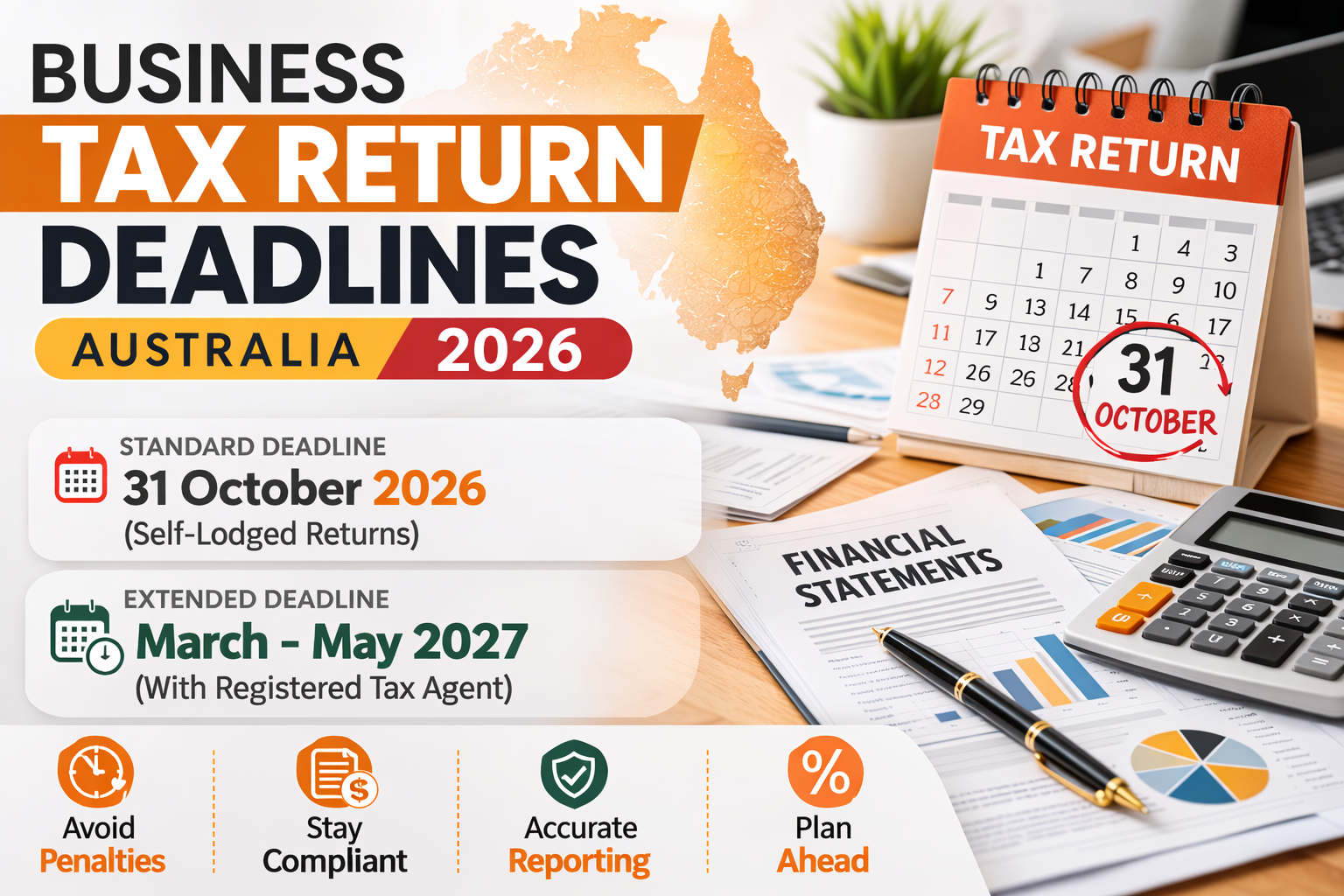
31 October 2026
This is the standard deadline for self-lodged tax returns when a business does not use a registered tax agent.
It commonly applies to:
- Sole traders lodging their individual return
- Partnerships lodging partnership tax returns
- Trusts lodging trust tax returns
Extended Deadlines with a Registered Tax Agent
When a business appoints a registered tax agent before the October deadline, lodgement extensions are often available under the official tax agent lodgement program managed by the Australian Taxation Office.
Many businesses therefore complete their lodgements between March and May of the following year.
Because these extensions depend on compliance history and documentation readiness, accurate year-end financial records remain essential.
Businesses preparing company financial statements and corporate tax reporting often coordinate this process alongside their annual financial reporting and tax preparation, which forms part of professional business tax return and year-end financial reporting services.
Common Reasons Businesses Miss Tax Deadlines
In practice, missed lodgement deadlines usually occur due to operational or documentation issues rather than intentional delay.
Common causes include:
Incomplete Financial Records
Missing invoices, bank reconciliations, or payroll records can delay financial statement preparation.
Late Finalisation of Financial Statements
Companies and trusts must finalise profit calculations before tax returns can be lodged.
Incorrect Business Structure Reporting
Partnerships, trusts, and companies have different reporting obligations which may complicate lodgement timing.
Poor Communication Between Business Owners and Accountants
If financial data is provided too late, accountants may not have enough time to complete the lodgement before the deadline.
Businesses that manage their year-end financial statements and corporate tax returns through structured financial reporting processes typically avoid these issues because financial records are reviewed earlier in the compliance cycle.
What Information Businesses Must Prepare Before Lodging
Preparing documentation early reduces the risk of compliance delays.
Typical records required include:
- Profit and loss statements
- Balance sheets
- Bank and credit card reconciliations
- Payroll and superannuation records
- Asset purchases and depreciation schedules
- Trust distribution resolutions (if applicable)
These records allow accountants to prepare accurate financial statements before calculating the final tax liability.
Penalties for Late Tax Return Lodgement
Failure to lodge on time can trigger a Failure to Lodge penalty imposed by the Australian Taxation Office.
Penalties are calculated based on:
- the size of the business
- the length of the delay
- prior compliance history
In addition to financial penalties, late lodgement may also lead to:
- increased regulatory scrutiny
- delayed tax refunds
- complications when applying for finance or investment
Maintaining accurate financial records and preparing financial statements early significantly reduces the likelihood of these compliance risks.
How Businesses Stay Compliant With Tax Deadlines
Most businesses avoid tax deadline stress by following a structured compliance approach.
This typically includes:
- maintaining accurate bookkeeping throughout the year
- preparing financial statements shortly after the financial year ends
- reviewing tax obligations well before October deadlines
- lodging returns through registered tax agents when appropriate
When financial statements and tax reporting are handled through professional year-end financial reporting and tax return preparation, businesses are able to manage lodgement timelines more effectively while ensuring compliance with requirements set by the Australian Taxation Office.
Key Takeaways
Business tax deadlines in Australia vary depending on business structure and lodgement method. While the standard self-lodgement deadline is typically 31 October, many businesses qualify for extended deadlines when working with registered tax agents.
However, extensions do not remove the need for proper financial preparation. Businesses that maintain organised financial records and complete their financial statements early are significantly less likely to face penalties or compliance issues.
Understanding tax deadlines — and preparing financial information in advance — remains one of the most effective ways businesses maintain ongoing tax compliance in Australia.